Heat pump contactors
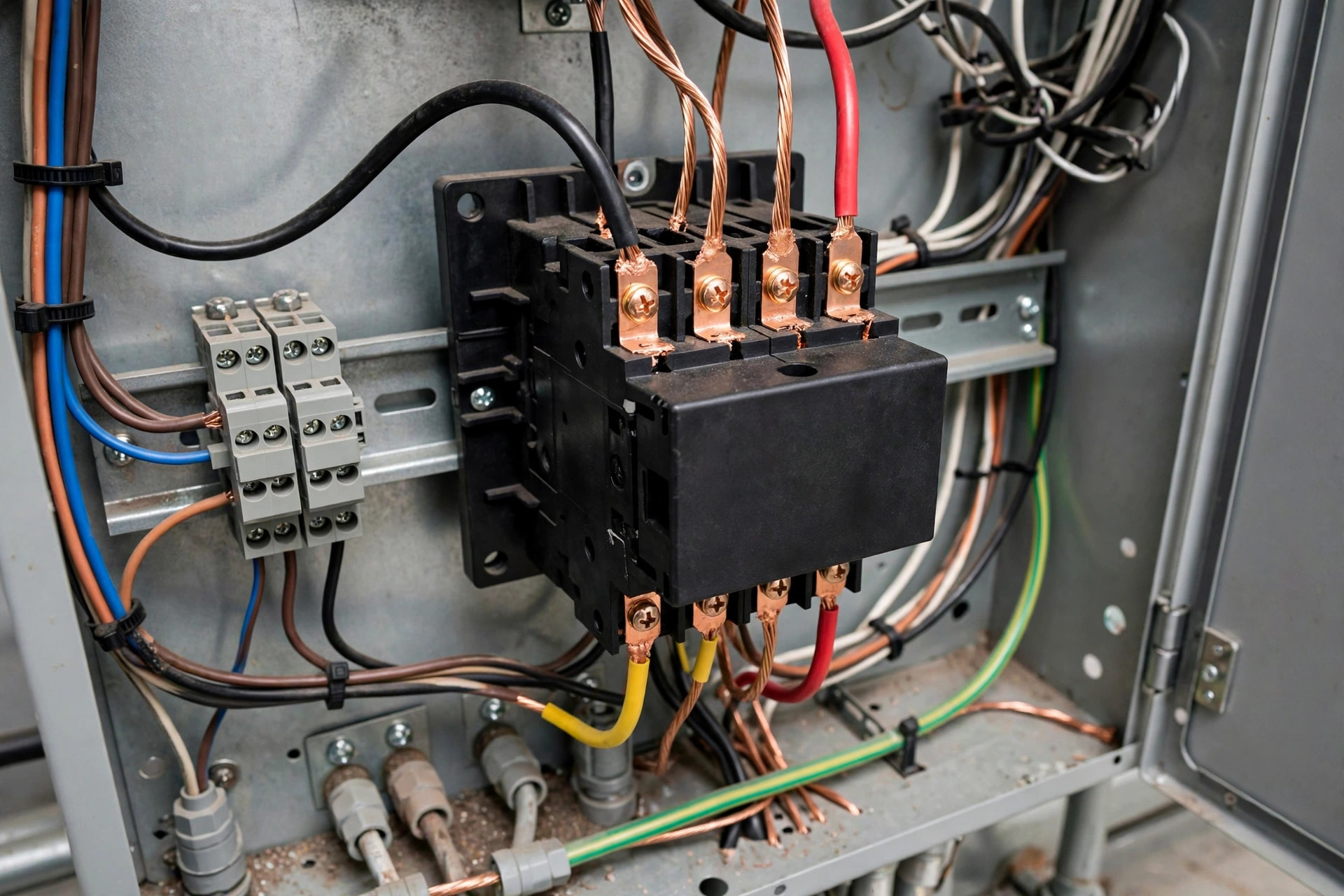
Contactors switch power to compressors, fans and heaters when the control system calls for heating or cooling. When one fails, the symptom often looks like a dead system — which is why coil and contact checks come before ordering.
Request a Quote — contactors Compatibility Guide
Typical use
Contactors switch power to compressors, fans and heaters when the control system calls for heating or cooling.
Common symptoms and failure signs
- A unit that will not start, or stays on when it should stop
- A contactor that chatters
- Pitted, burned or stuck contacts
- Repeated contactor failure — check coil voltage, load and control signal before reordering
A symptom alone does not prove this category is at fault. Check wiring, connectors, power and the system documentation first, and do not order by symptom alone.
Specification checklist — what to confirm before ordering
| Field | Why it matters | Where to find it |
|---|---|---|
| Coil voltage | Wrong coil voltage means the contactor will not pull in, or will burn out | Existing contactor, control circuit |
| Poles and current rating | Must suit the load it switches | Existing part, system documentation |
| Terminal layout and mounting | Wiring and fit must transfer | Existing part measurements |
| Auxiliary contacts, if fitted | Some circuits need them; some do not | Existing part, wiring diagram |
Common mistakes
- Ordering by pole count alone, without current rating.
- Ignoring a control-signal fault and blaming the contactor.
- Working on a live high-voltage circuit without qualification.
Must bring with your inquiry — contactors
- Coil voltage and number of poles
- Current rating and the load it switches (compressor, fan, heater)
- Terminals, mounting and any auxiliary contacts
- Symptoms: chatter, stuck contacts, clicking with no run, or intermittent operation
- Quantity range and delivery region
Common mismatch cases (generic, not a diagnosis for your system)
- Same poles, different coil voltage: the contactor will not pull in reliably, or will not hold.
- Same coil, lower current rating: the part can overheat or fail early under the real load.
- Contactor replaced, control signal not checked: clicking with no run can also come from the control circuit, not the contactor alone.
Also in Resources: a printable contactor checklist with coil, poles and current fields.
Request a Quote — Heat pump contactors Compatibility Guide
Also compare: sensors · controllers · capacitors · thermostats